• Request Info
  • Apply
  • Give
  • Request Info
  • Apply
  • Give

Search

  • A-Z Index
  • Map

Bredesen Center

Bredesen Center

  • Home
  • PhD Programs
    • Why We’re Different
    • Data Science & Engineering
    • Energy Science & Engineering
    • Genome Science & Technology
  • Future Students
    • Connect With Us
    • Start Your Application
    • Internships
  • Become a Mentor
  • About
    • Discover East Tennessee
  • Directory

Konstantinos Georgiou
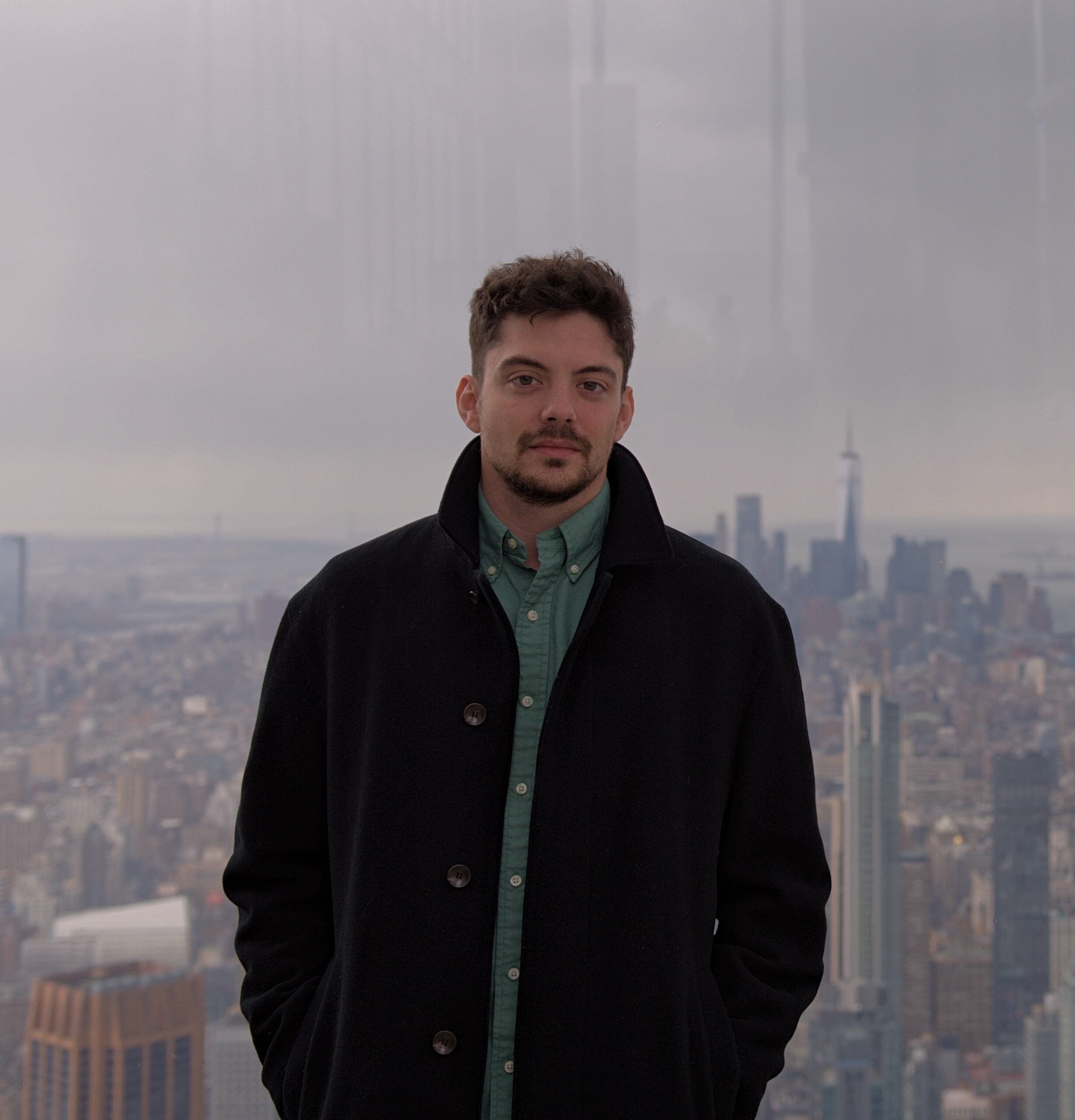
Konstantinos Georgiou

October 31, 2023 by

Instagram
[email protected]
Profile

Konstantinos Georgiou

Graduate Student
Program:

Data Science and Engineering (DSE)

Georgiou is currently a PhD candidate in the Data Science and Engineering program at the Bredesen Center for Interdisciplinary Research and Graduate Education at the University of Tennessee, Knoxville, advised by Dr. Hairong Qi. He was awarded a University Fellowship upon admission. Prior to his PhD, he worked as a Software and Data Engineer. During his doctoral studies, he interned at Amazon as an Applied Scientist. He has published peer-reviewed papers at venues including NeurIPS, WACV, IGARSS, and CHASE, and has presented his work at NeurIPS 2023, IGARSS 2024 and CHASE 2025.

Education

Georgiou received his Diploma (5-year integrated Master’s) in Computer Science and Engineering from the University of Patras, Greece in 2019.

Research

Georgiou’s research investigates how masking-based strategies can serve as a unifying principle for learning more robust, generalizable, and interpretable deep learning representations across diverse domains. His dissertation, titled “Learning from What’s Missing: Masked Approaches for Robust and Interpretable Deep Models,” spans three application areas. In remote sensing, he develops cross-scale masked autoencoders that align representations across different satellite image resolutions, enabling effective transfer to multi-resolution real-world data. In general-purpose computer vision, he proposes a dual-space masked distillation framework that combines pixel-level reconstruction with semantic-level teacher alignment, achieving competitive performance on ImageNet-1K. In clinical AI, he applies random feature masking to longitudinal health records for early dementia detection, improving model robustness to missing data while producing more interpretable predictions. Across all three domains, the central insight is that partial observation is not merely a data limitation but a powerful learning signal that forces models to capture broader structure and avoid over-reliance on narrow cues.

Bredesen Center

The Bredesen Center for Interdisciplinary Research and Graduate Education

310 Ferris Hall 1508 Middle Dr Knoxville, TN 37996

Phone: 865-974-7999

Questions: [email protected]

The University of Tennessee, Knoxville
Knoxville, Tennessee 37996
865-974-1000

The flagship campus of the University of Tennessee System and partner in the Tennessee Transfer Pathway.

ADA Privacy Safety Title IX